
The Cost of Leaving Critical Roles Unfilled

It’s been eight weeks since your VP of Quality left, and the org chart still shows their name in the box. In the meantime, their direct reports are routing decisions to your VP of Operations, who now signs off on things without full context. A supplier audit got pushed back twice. Nobody’s said it out loud yet, but everyone’s noticed.
That’s what a critical vacancy actually looks like. It doesn’t show up as a line item. It shows up as slower decisions, stretched people, and a slow accumulation of things that used to happen on time and now don’t.
The Hidden Costs of Vacancy
An open position’s days to fill is easy to track. Its ripple effects are not, which is exactly why they tend to get underestimated. A few of the ways a prolonged vacancy shows up inside a food and beverage organization:
- Productivity erodes in places you’re not watching. Someone is almost always absorbing the missing role’s work on top of their own, and that person is rarely operating at full capacity for either job.
- Managers spend their time filling gaps instead of leading. A plant manager covering for an open quality manager isn’t developing their team or planning ahead.
- Initiatives quietly slip. The projects tied to that role stall — a new product launch, a supplier transition, a compliance update — and stalled projects have an unfortunate way of staying stalled.
- Pressure builds toward a rushed decision. The longer a seat sits empty, the more tempting it becomes to fill it with whoever’s available rather than whoever’s right. That’s how organizations end up rehiring for the same role a year later.
None of this means every vacancy is a crisis. A lot of roles can sit open for a while without much disruption. The roles that can’t are the ones this article is about.
Critical Roles Behave Differently
Not every open position carries the same weight. A critical role — a plant manager, a director of food safety, a VP of supply chain, a specialized technical or leadership position — tends to have three things in common: the work doesn’t pause while the seat is empty, few people inside the organization can absorb it, and the pool of people qualified to step into it is genuinely small.
That last point is where a lot of searches stall. A posted job opening for a specialized food and beverage leadership role can generate a stack of applications and still leave a hiring manager without a reliable option. Volume and fit aren’t the same thing. An HR leader can have forty resumes and zero people who’ve actually led a co-packer relationship or been through an SQF certification process to completion. That gap is usually where the real cost of a vacancy lives.
Reach The Right People
Here’s the part that’s easy to miss: some of the strongest candidates for critical food and beverage roles aren’t watching job boards. They’re employed and not actively looking. This is where access starts to matter more than reach.
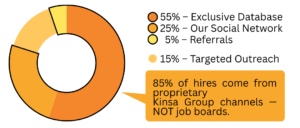 Based on last year’s placement data, 55% of Kinsa’s successful hires came directly from our exclusive database; professionals we’d already built a relationship with, not people responding cold to a new job listing. Another 25% came through our recruiters’ direct outreach into their professional and social networks, particularly LinkedIn, and 5% came through referrals from those same connections. Altogether, 85% of our placements come from channels that simply aren’t part of a traditional job posting or public resume search.
Caution: Speed
While leaving a crucial role vacant is risky, a rushed hire into a critical position tends to create the same problems it was meant to solve, just later, and often worse, since now there’s a transition to manage on top of everything else.
The actual goal is narrower: reduce the amount of time a critical position sits open with no real progress, without lowering the bar to get there.
Where Kinsa Group Comes In
A critical vacancy deserves a deliberate search. Kinsa Group has worked within the food and beverage industry for over 40 years, which means the recruiters running that search already know the difference between a candidate who looks right on paper and one who’s actually run the floor, the audit, or the P&L in question.
If you’re sitting on a critical role right now and are feeling the gap it’s leaving behind, connect with Kinsa Group to talk through what you’re looking for. And if you’d rather see who’s out there first, view Kinsa’s Top Talent to browse a small sample of the qualified food and beverage professionals we’re currently representing.
Contact Kinsa GroupRelated Posts: