
4 Hiring Metrics That Predict Turnover in Food & Beverage

When a plant manager walks out after six months or a quality director leaves before their first annual review, the exit interview usually points to misalignment: role expectations, company culture, management style. What it rarely mentions is that the warning signs were visible long before the resignation letter.
Most food and beverage employers track turnover as a lagging indicator: someone leaves, you measure it, you react. But the more useful question isn’t who left, it’s what predicted they would. Hiring metrics, when analyzed correctly, can reveal turnover risk before it becomes a retention crisis.
Why First Impressions Extend Beyond Day One
First-90-day turnover is one of the clearest diagnostic signals in recruiting. It’s expensive—replacement costs can run 50–200% of annual salary for specialized roles—but more importantly, it’s preventable. Early exits typically point to a disconnect that existed before the offer was even signed.
High turnover in this window often reveals issues including: job descriptions that oversold autonomy, hiring managers who screened for urgency rather than fit, or onboarding processes that assumed knowledge rather than building it. In beverage operations, for example, a production supervisor hired for “leadership experience” might arrive expecting to have strategic input, only to find the role is 90% floor execution with minimal decision-making latitude. That’s not a performance problem. It’s a hiring problem.
Kinsa Group’s 90-day drop-off rate sits at 8%, significantly lower than food and beverage industry norms. That outcome is the result of alignment-focused recruiting. When candidates understand exactly what they’re walking into, and hiring managers are clear about what success actually requires, early exits drop. The metric itself is just confirmation that expectations were set accurately from the start.
Where Your Best Hires Actually Come From
Not all sourcing channels produce the same retention outcomes. Job boards might fill requisitions quickly, but sp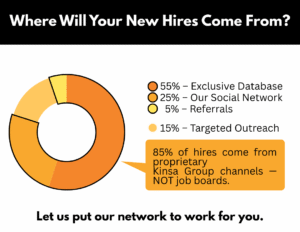 eed doesn’t always translate to longevity. A regional sales manager sourced through a generic posting might check the technical boxes but lack the relationship capital or industry fluency that keeps that new hire engaged past the first challenging quarter.
More than half of Kinsa placements come from our proprietary network sourcing—candidates who are referred, reconnected, or cultivated over time within the food and beverage sector.
These aren’t applicants responding to a job post. They’re professionals who already understand the industry’s operational realities, seasonal pressures, and cultural nuances. That context matters. A supply chain lead who has managed cold storage logistics for a regional dairy isn’t just technically qualified; they know what the third-shift problem-solving actually looks like.
Source-of-hire data tells you more than where people came from. It tells you which channels are producing hires who stay, perform, and grow. If your highest retention comes from employee referrals and industry networks, that’s a signal to invest more heavily in relationship-based recruiting and less in transactional sourcing.
The Hidden Cost of Hiring Fast Versus Hiring Right
Time-to-fill is a metric most employers want to shrink. Open roles strain operations, especially in production environments where one vacancy can ripple across shift coverage and output targets. But velocity has trade-offs.
Rushed hiring compresses due diligence. A quality assurance manager hired in three weeks because the position was critical might lack the regulatory depth or stakeholder management skills the role actually demands. Six months later, when they’re struggling to navigate FSMA compliance or can’t align with co-packers, the cost of that speed becomes clear.
Kinsa’s average time-to-fill is 60 days, half the 120-day industry benchmark for specialized food and beverage roles. That efficiency is about having immediate access to pre-vetted, sector-specific talent. The timeline compresses because the relationship-building happened earlier. A focused search that places a director of operations who stays four years is far more valuable than a search that produces a twelve-month tenure.
Efficient hiring and quality hiring aren’t opposing goals. The question is whether your process is structured to support both.
Looking for pre-vetted industry professionals?
View Top TalentWhat Offer Acceptance Rates Actually Reveal
Offer acceptance rates can feel like a vanity metric, but they surface important patterns. A declining acceptance rate might indicate compensation drift; your offers are no longer competitive for the talent level you’re targeting. Or it could signal that finalists are getting to the offer stage and reconsidering. That hesitation often traces back to interviews that didn’t build conviction or hiring managers who couldn’t articulate a compelling vision for the role.
Download SalaryPatterns That Predict What’s Coming
Turnover metrics become predictive when you track them together. If your 90-day turnover is climbing and your strongest retention is coming from one specific sourcing channel, that’s a signal to shift resources toward what’s working. If your time-to-fill improves while offer acceptance declines, candidates may be moving through the process faster than they’re building confidence in the opportunity.
The value isn’t in any single data point. It’s in the pattern. Hiring metrics don’t just measure what happened; they reveal what’s likely to happen next if the process doesn’t adjust.
In food and beverage, those patterns matter because turnover carries operational consequences beyond recruiting costs. When experienced leaders leave, they take institutional knowledge, supplier relationships, regulatory familiarity, and operational continuity with them.
That’s why retention problems often start much earlier than employers realize. The signals are usually already present in the hiring process itself — in the roles that struggle to close, the candidates who hesitate, and the hires who leave faster than expected.
Our Network, Your Advantage
Kinsa Group partners with food and beverage employers to strengthen hiring alignment from the start, helping organizations identify candidates with the technical expertise, operational fit, and long-term potential needed to support retention beyond the first year. In an industry where the cost of a mis-hire extends far beyond recruiting, understanding what your hiring patterns are telling you can help prevent turnover before it disrupts operations.
Contact UsRelated posts: